Irish Healthcare Professionals Shape the Future of AI Integration in Healthcare
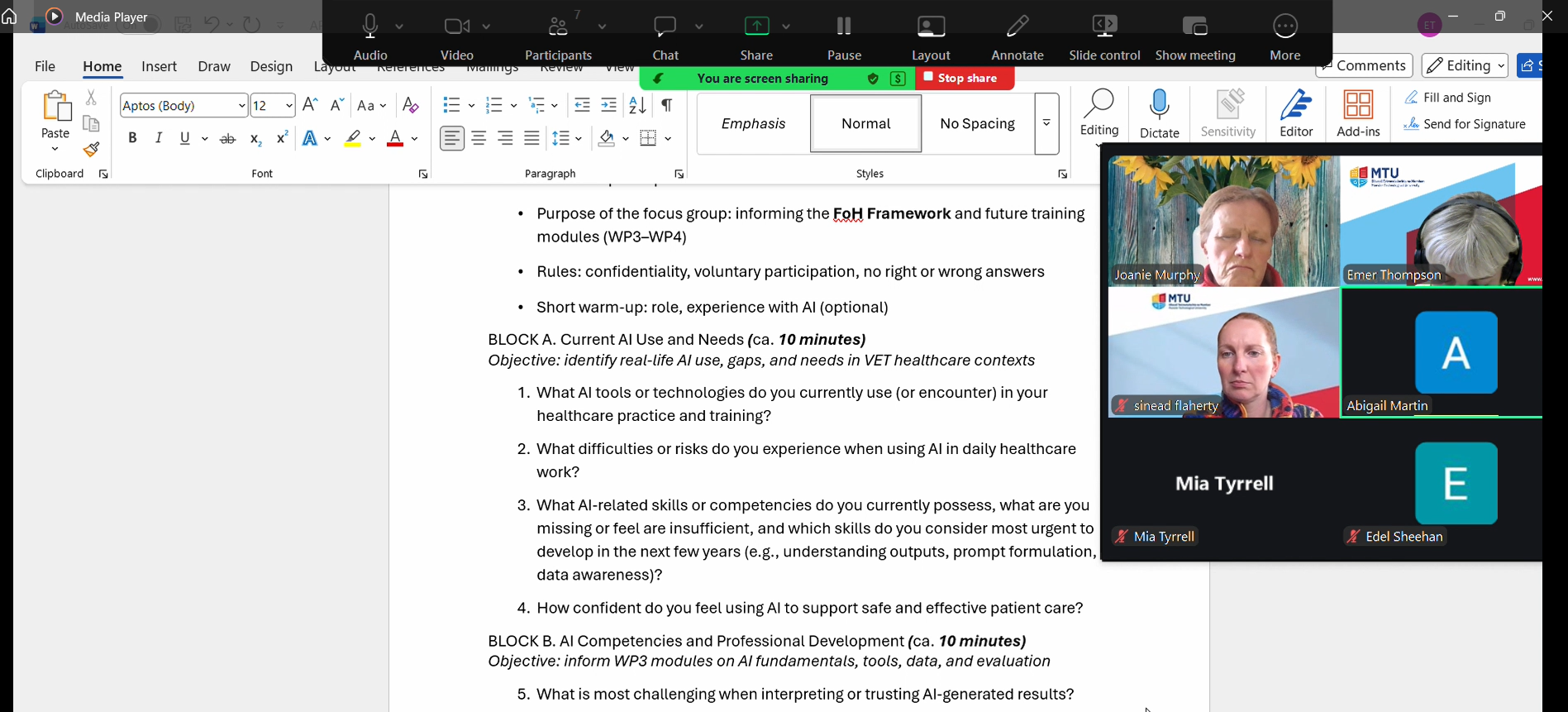
As part of the Future of Healthcare (FoH) Erasmus+ project, Munster Technological University (MTU) successfully conducted the Irish Focus Group, bringing together nursing professionals, nurse educators, and healthcare practitioners to explore the opportunities, challenges, and future skills required for the responsible use of Artificial Intelligence in healthcare. The online session provided valuable evidence that will directly inform the development of the FoH Framework and future training modules for healthcare professionals.
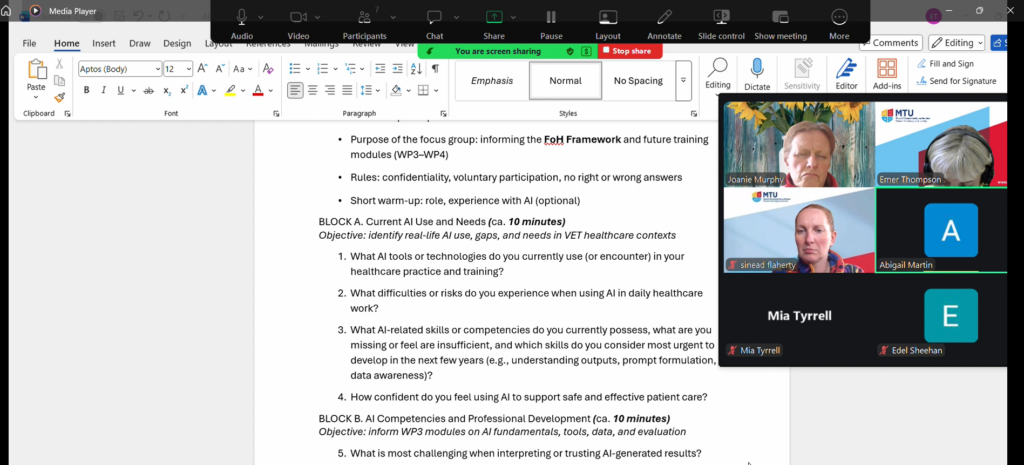
Healthcare professionals and educators participated in MTU’s online FoH Focus Group, sharing their experiences, concerns, and expectations regarding the future role of AI in healthcare practice and education.
AI in Healthcare: Opportunities, Concerns, and Learning Needs
Participants discussed their current experiences with AI technologies, identifying tools such as ChatGPT, Microsoft Copilot, AI-assisted note-taking applications, and healthcare-specific innovations including mental health chatbots and clinical documentation support systems. While recognising the growing potential of AI, participants highlighted concerns regarding trustworthiness, misinformation, bias, and the risk of overreliance on technology.
A key message emerging from the discussion was the need for continuous professional development that helps healthcare professionals critically evaluate AI-generated outputs while maintaining professional judgement and patient safety.

Participants examined ethical, legal, and professional responsibilities related to AI-supported healthcare, highlighting the importance of maintaining trust, accountability, and patient safety.
Ethics, Accountability, and Human-Centred Care Remain Essential
The focus group strongly emphasised that while AI can support clinical practice, responsibility for patient care must remain with healthcare professionals. Participants explored ethical principles such as autonomy, beneficence, non-maleficence, justice, data protection, transparency, and accountability. They agreed that AI should function as a decision-support tool rather than a decision-maker.
The discussion highlighted the importance of governance, regulation, and professional standards to ensure that AI technologies are implemented safely, ethically, and responsibly across healthcare systems.
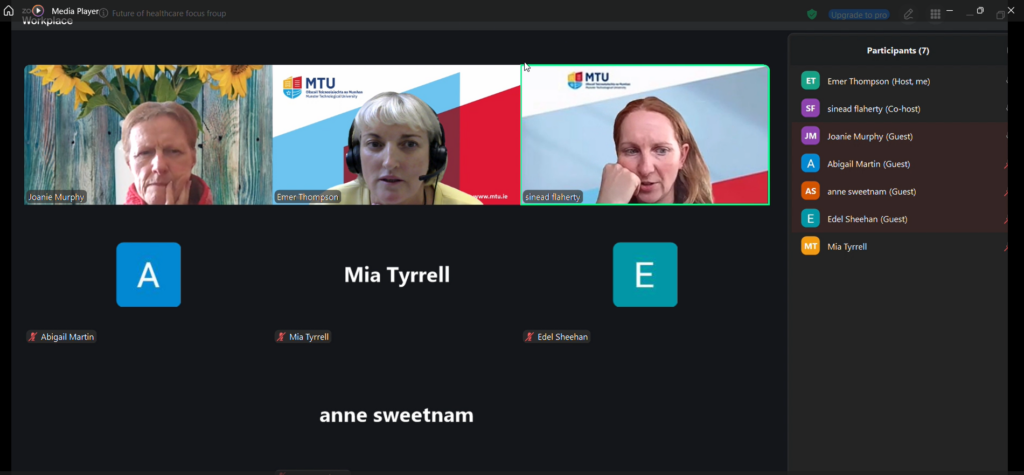
The online focus group generated valuable recommendations that will contribute directly to the FoH Framework and future training modules, ensuring a human-centred approach to AI integration in healthcare.
Building Future Skills for Safe and Responsible AI Adoption
One of the most important outcomes of the focus group was the identification of future training priorities. Participants stressed the need for healthcare professionals to develop competencies in AI literacy, critical thinking, communication, source verification, ethical decision-making, and patient-centred communication. They also emphasised that future AI education should help professionals explain AI-supported decisions clearly to patients while preserving empathy and therapeutic relationships.
“AI can support healthcare, but professional judgement, empathy, and accountability must always remain central to patient care.”
Key Outcomes from the MTU Focus Group
- Recognition of AI as a valuable support tool, but not a replacement for professional judgement.
- Strong demand for training focused on AI verification, critical appraisal, and safe use.
- Emphasis on ethics, accountability, transparency, and patient trust.
- Need for healthcare professionals to develop communication skills for discussing AI-informed decisions with patients.
- Support for continuous professional development as AI technologies rapidly evolve.
- Confirmation that future healthcare education must combine technological competence with empathy, professionalism, and human-centred care.
The MTU Focus Group provides an important contribution to the ongoing development of the FoH Framework, helping ensure that future healthcare professionals are equipped not only with AI-related competencies but also with the ethical, relational, and professional skills required to deliver safe and compassionate healthcare in an increasingly digital world.