Future of Healthcare Newsletter No. 2: Building Competences for Responsible AI in Healthcare
Discover the latest FoH project developments, from our first face-to-face partner meeting in Ireland and multinational focus group findings to the emerging competency framework for preparing healthcare professionals for a human-centred, ethical and AI-enabled future.
From Multinational Focus Groups to the Future of Healthcare Framework
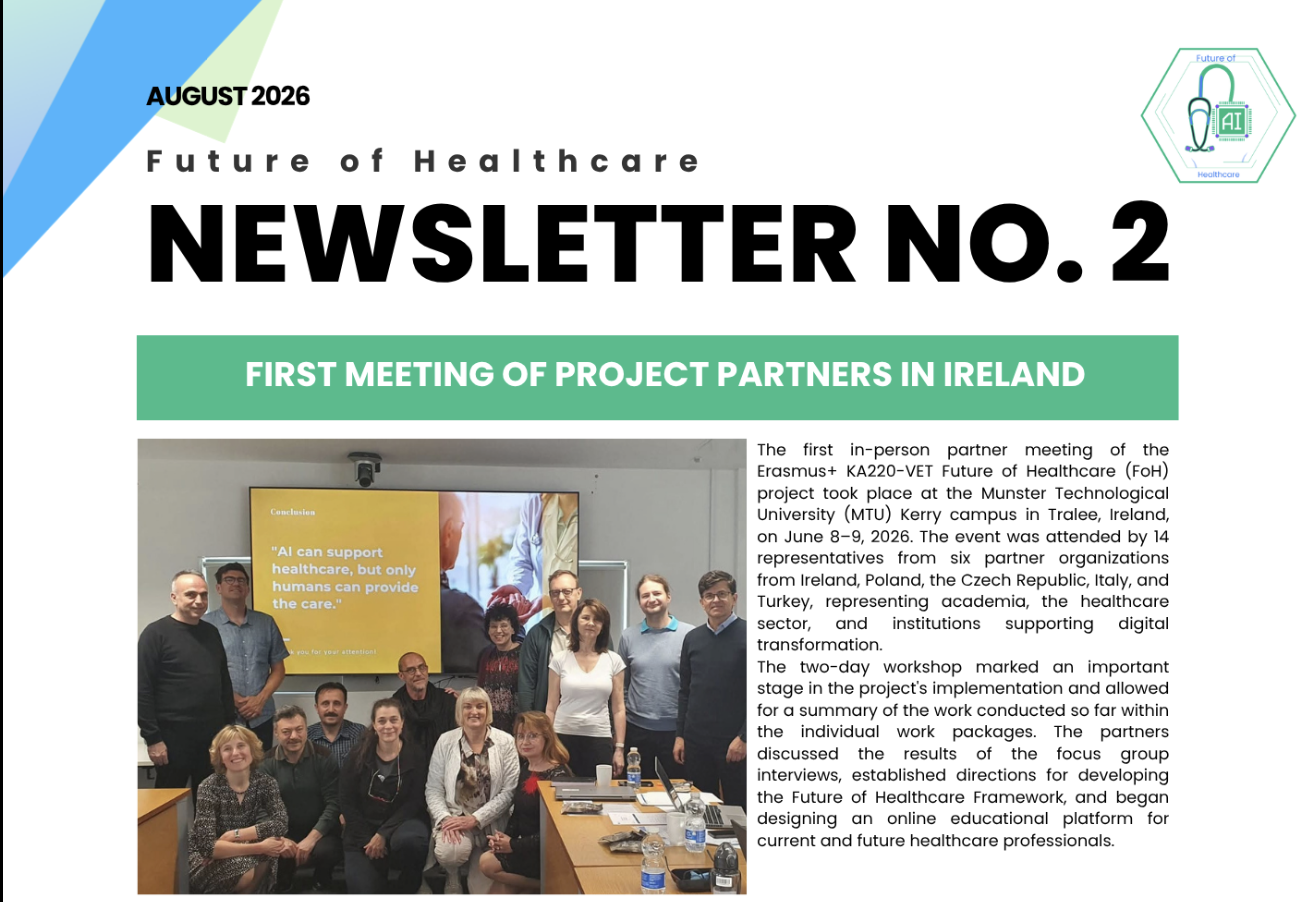
The Future of Healthcare (FoH) project has published its second newsletter, highlighting the progress made during the first stage of the project and the joint efforts of partners to prepare healthcare professionals for the responsible use of Artificial Intelligence.
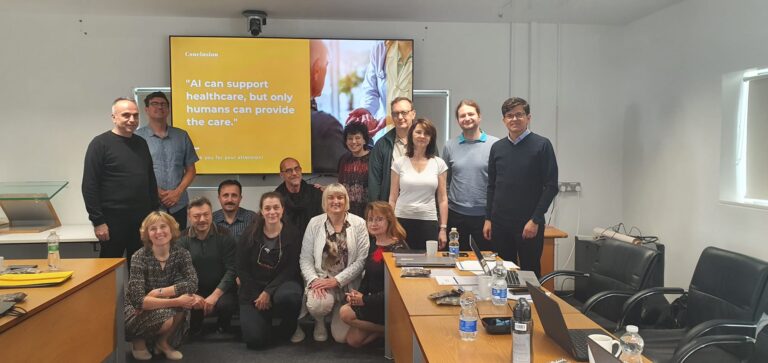
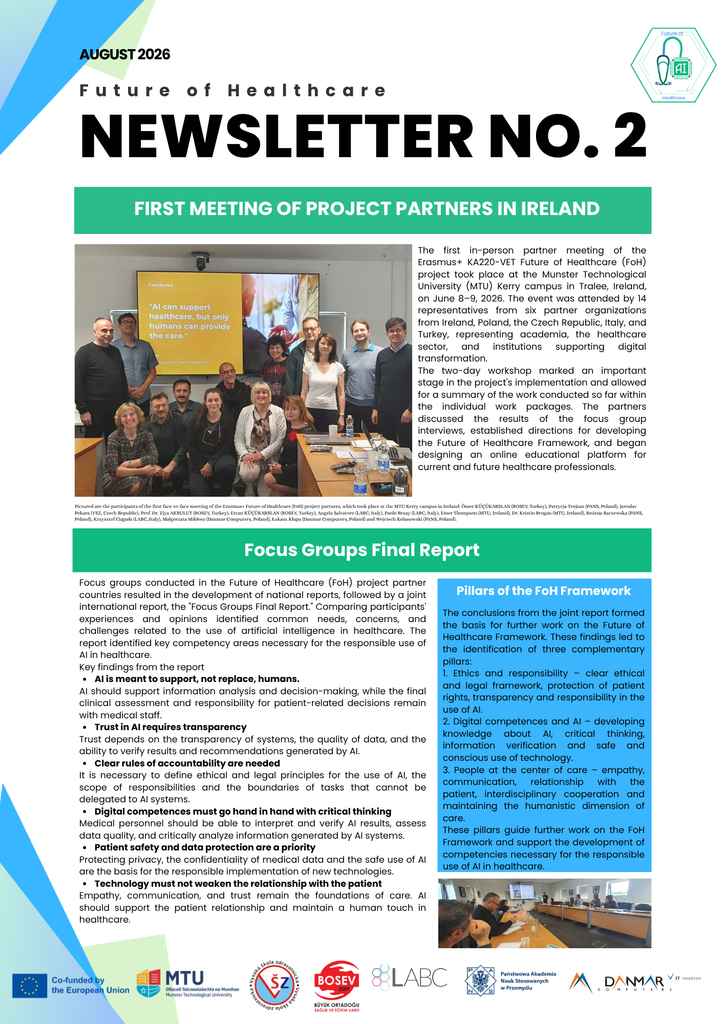
A major milestone was the first face-to-face meeting of the FoH consortium, hosted by Munster Technological University (MTU) at its Kerry campus in Tralee, Ireland, on 8–9 June 2026. The meeting brought together 14 representatives from six partner organisations in Ireland, Poland, the Czech Republic, Italy and Türkiye, representing academia, healthcare and organisations supporting digital transformation.
During the two-day meeting, partners reviewed progress across the project work packages, discussed the results of the focus groups conducted in the partner countries, agreed on directions for the development of the Future of Healthcare Framework, and advanced plans for an online educational platform for current and future healthcare professionals.
The national focus groups provided an important evidence base for the next stages of FoH. Their findings were consolidated into national reports and subsequently into the joint Focus Groups Final Report, revealing common needs, concerns and challenges surrounding the use of AI in healthcare.
Across the participating countries, several messages emerged consistently. AI should support healthcare professionals rather than replace them, with final clinical judgement and responsibility remaining with qualified professionals. Trust in AI requires transparency, reliable data and the ability to verify AI-generated results. Participants also highlighted the importance of clear ethical and legal responsibilities, critical thinking and digital competence, patient safety and data protection.
Equally importantly, technological development must not weaken the human relationship at the heart of healthcare. Empathy, communication and trust remain essential elements of patient care, even as AI becomes increasingly integrated into healthcare systems.
These findings are informing the continuing development of the FoH Framework and helping the partnership translate real professional needs into a coherent competency-based approach to AI-enabled healthcare.
Preparing Healthcare Professionals for an AI-Enabled, Human-Centred Future
The second FoH Newsletter also looks ahead to the competencies healthcare professionals will increasingly need as digital transformation accelerates.
The project findings underline that technical knowledge alone will not be sufficient. Healthcare professionals will need to combine digital and AI literacy with critical thinking, the ability to assess the credibility of AI-generated information, ethical awareness, medical data protection, effective communication and interdisciplinary collaboration.
These needs are at the centre of the Future of Healthcare Framework, which is being developed to support the preparation of current and future healthcare professionals for the responsible use of modern technologies. The underlying principle remains clear: AI can contribute to diagnostics, data analysis, decision support and the organisation of patient care, but responsibility for clinical decisions, patient safety and high-quality care remains human.
The first stage of the project has already delivered important results, including the completion of focus groups across all partner countries, national reports and a joint international report, the identification of key future competence areas, the launch of work on the FoH Framework, the development of the concept for an online educational platform, and initial preparation for training modules addressing AI and digital transformation.
Building on this foundation, the FoH partnership will now continue with the development of the Framework and training modules, design of the e-learning platform, preparation of teaching materials, pilot implementation of the training programme and evaluation of project results.
Together, these activities aim to ensure that technological progress in healthcare is accompanied by the knowledge, skills, professional judgement and human-centred values needed to use AI responsibly.
“AI can support healthcare, but only humans can provide the care.”